
Theory of Human Energy: Insight 8

The Age of Emotional Substitutes
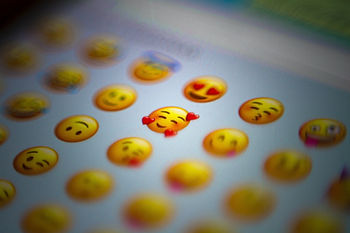
During an ongoing and definitely unintended human experiment of my own, I have already come to realize something unsettling: the human being no longer seems capable of deep, authentic feeling without supplementing it with objects, with curated images, with the “right” graphics.
It is far easier to replace emotion with a financial exchange or a string of emojis.
This is the age of anti-affection, just as it is the age of anti-intelligence.
In the past, people felt intensely because they could not outsource their emotional cognition to gifts or digital symbols. They might have been punished for what they felt, but they felt it, from the depths of their being.
Now we are free to feel safely. And yet, paradoxically, we seem unable to feel deeply. Because we can afford an emotional shopping cart, one that carries us smoothly between sentiments and recipients, with maximum efficiency and minimal metacognition.
And what happens over time to a body that does not move, that allows itself always to be carried? It gains weight. Yes, we may become emotionally rigid, until we can no longer move at all. We may forget what it means to truly experience any emotion in its raw, demanding fullness. And this is striking, when we consider that all decisions are, at their core, emotional.
Will we become a humanity living inside the illusion of emotional fulfillment - successful on every surface, yet hollow underneath? In the end, how something is said - the emotional form, whether sincere or staged - often matters more than what is said, the intellectual content itself. Emotional messaging, or rather emotional intent, can blind a person even in the face of facts.
And often, those with genuinely kind souls - those who do good wholeheartedly, without asking anything in return - may be abrupt in speech, even rough at the edges, and thus appear emotionally unfit.
What a global confusion!
What an existential paradox! Universally acknowledged.


Comments